


From Forest to Frame to Table
Cinghiale - The Central Animal
In the frame, the wild boar (cinghiale) is pursued. At the table, it is transformed.
If one animal anchors the relationship between Tuscan hunting, Renaissance imagery, and local cooking, it is the wild boar (cinghiale).
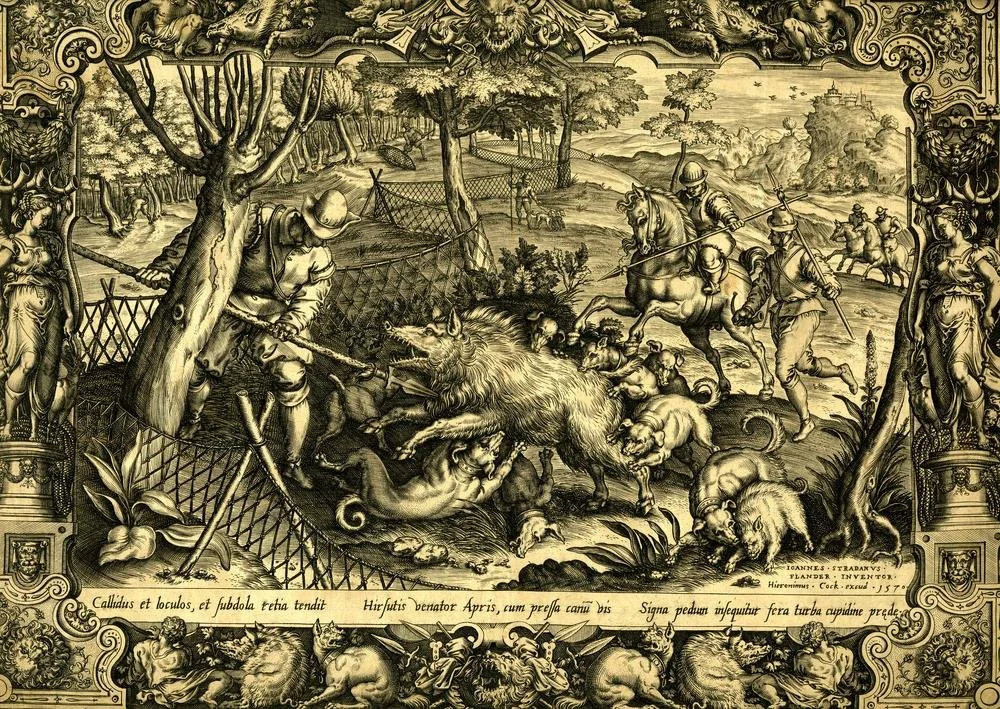
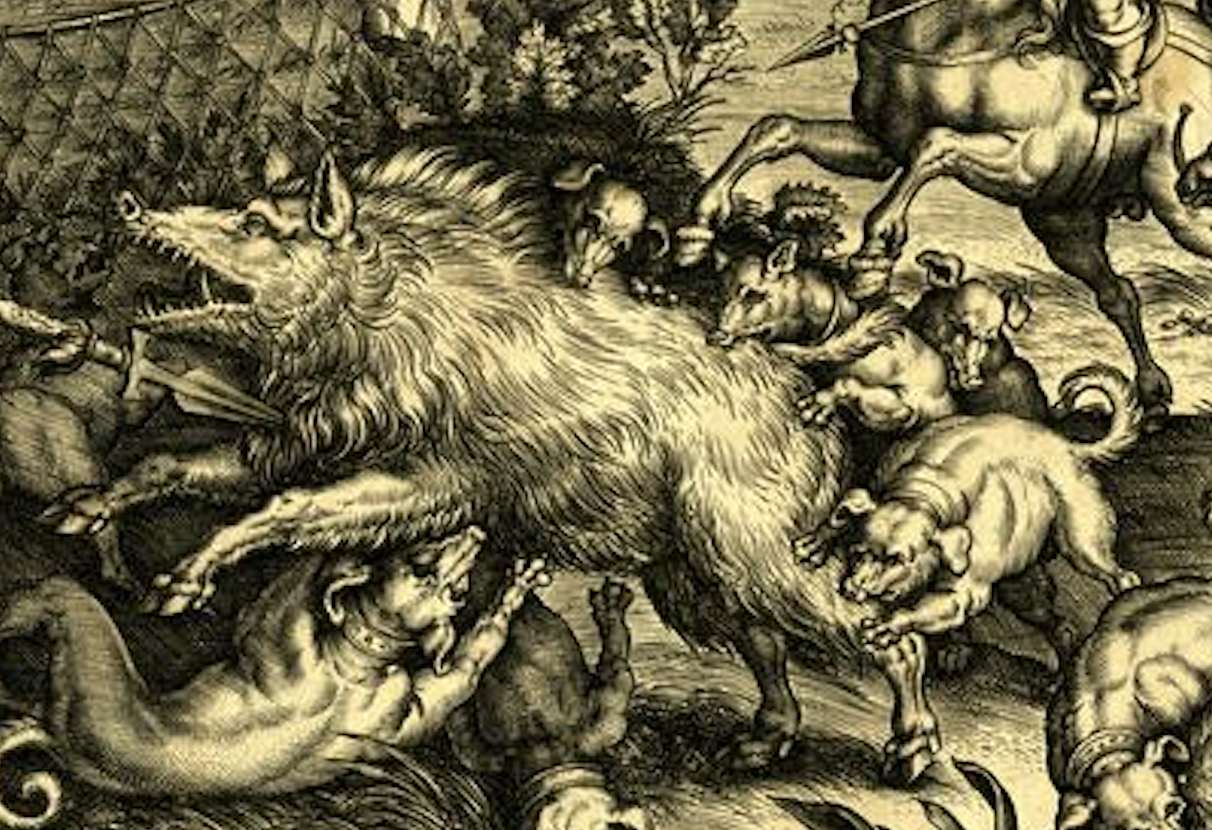
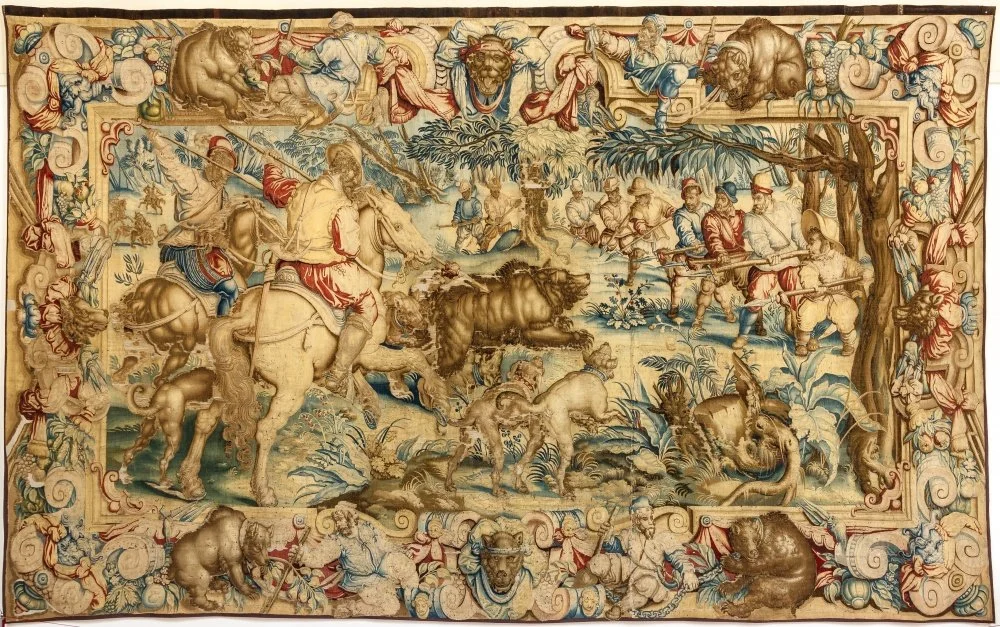
In Giovanni Stradano (1523–1605) ’s tapestry Caccia al Cinghiale con L’archibugio(Wild Boar Hunt with the Harquebus), the hunt (la caccia) appears as an organised expression of Medici court life. Hunters, dogs, weapons, and the surrounding landscape form a controlled sequence around the pursuit of the animal.
Centuries later, wild-boar hunting (caccia al cinghiale) remains part of rural Tuscan culture. Its communal character survives through hunting groups, seasonal gatherings, and wild-boar festivals (sagre del cinghiale), where the animal passes from the woodland into the kitchen.
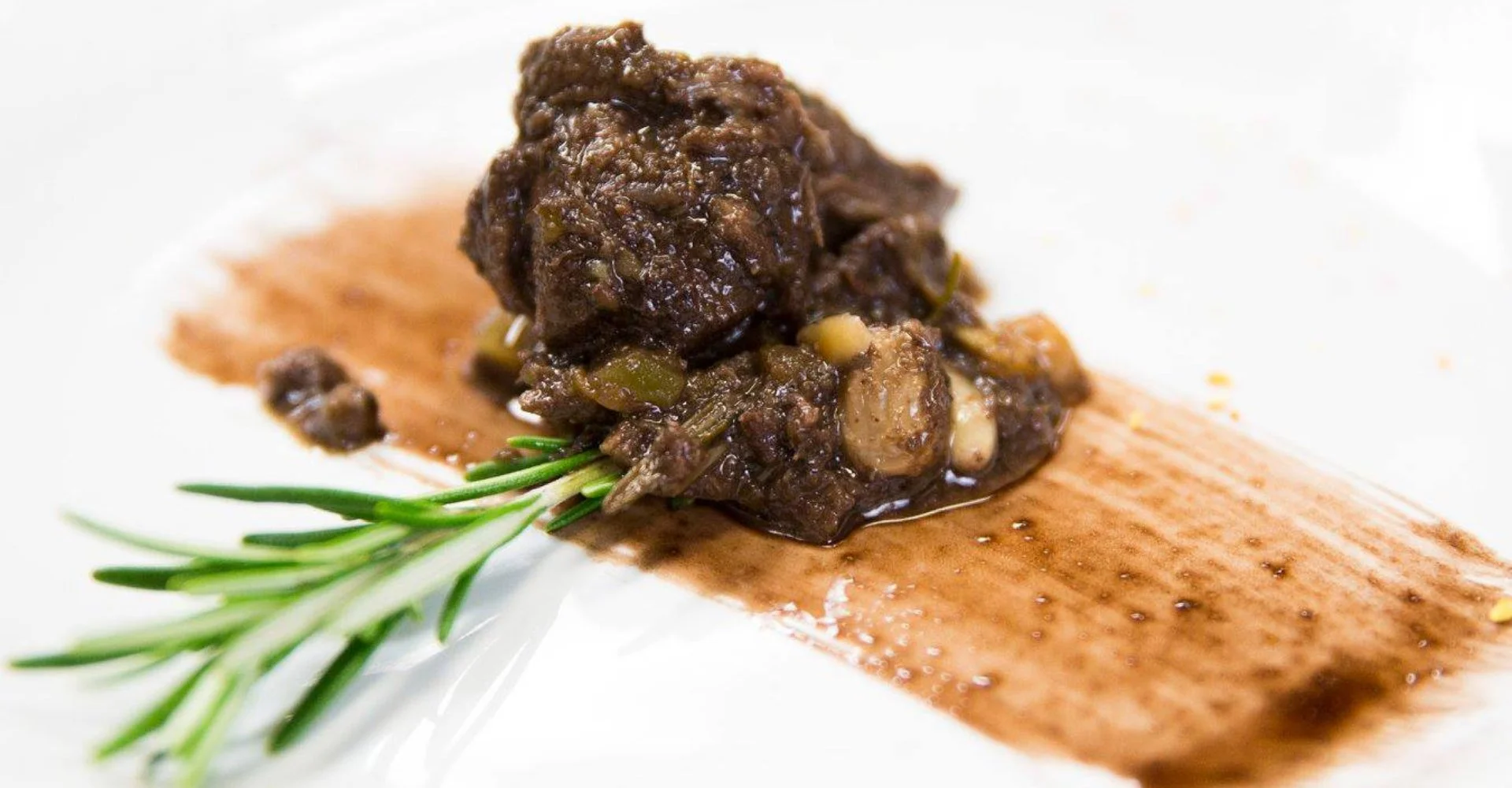
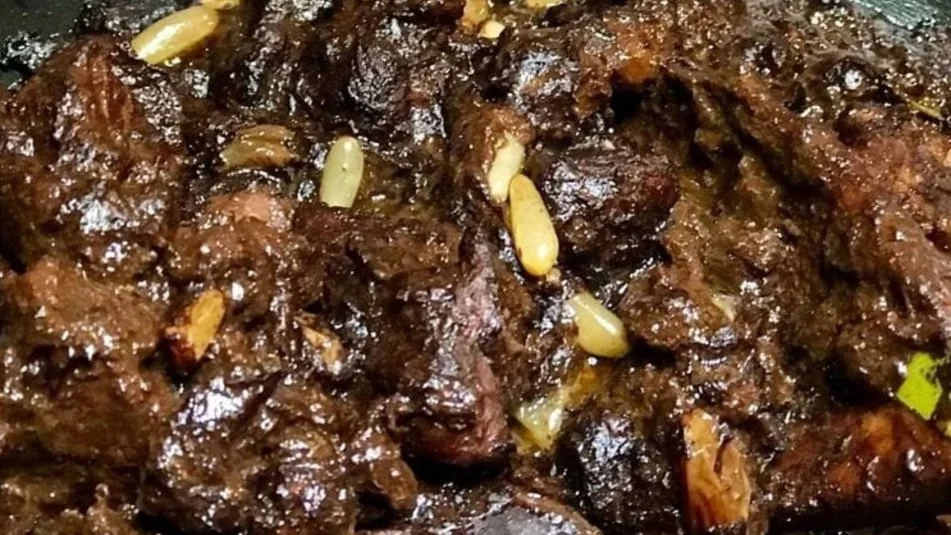
On the table: Cinghiale in dolceforte
Wild boar in sweet-and-sour sauce (cinghiale in dolceforte) belongs to an older Florentine culinary tradition—one that still feels familiar at local tables and wild-boar festivals (sagre del cinghiale), yet is often overlooked by visitors in favour of the more recognisable wild-boar ragù (ragù di cinghiale).
La ricetta del cinghiale in dolceforte (The recipe for wild boar in dolceforte)
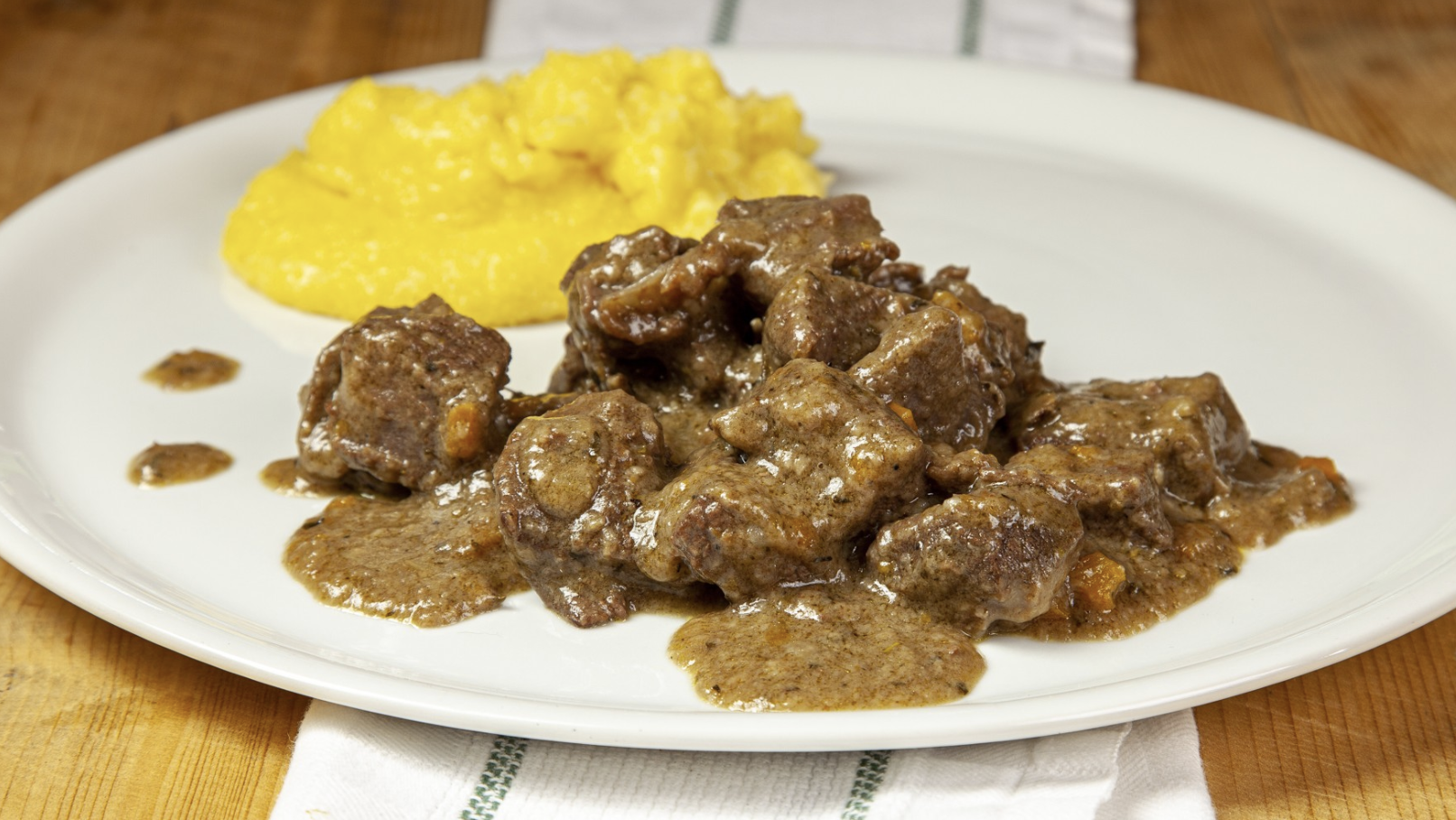
The intensity of the meat is balanced with vinegar, sugar, dark chocolate, raisins, pine nuts, spices, and candied citrus peel. The long cooking softens the meat while building layers of sweetness, acidity, bitterness, and spice. An animal associated with force and disorder is transformed through wine, fire, and time.
The Painted Hunt
The frame preserves the hunt. The table preserves the tradition.
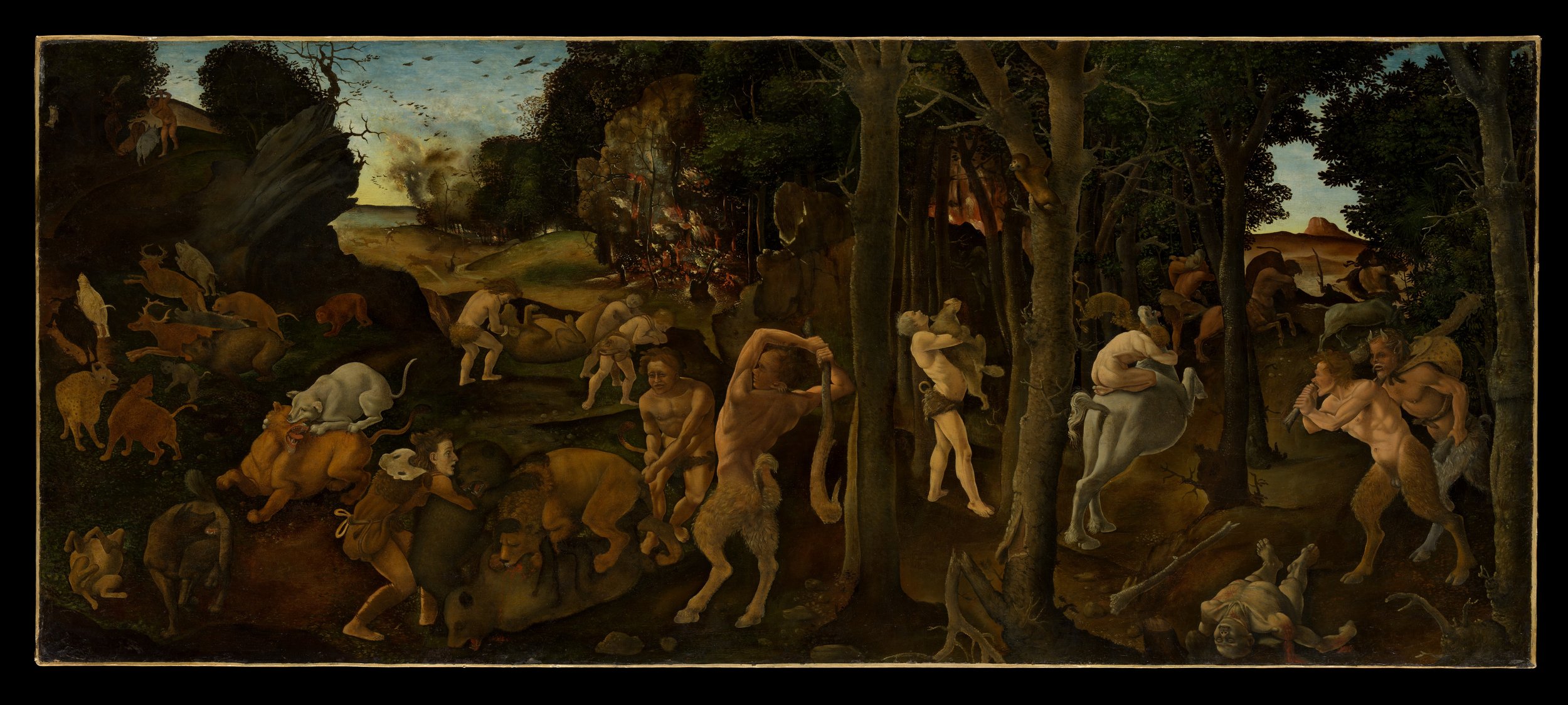
Across centuries of Tuscan Renaissance art (Arte del Rinascimento Toscano), the hunt repeatedly appears as part of the region’s relationship with the wild. In Paolo Uccello (1397–1475)’s Caccia nella Foresta, also known as Caccia Notturna (The Hunt in the Forest), riders and hunting dogs move through a carefully ordered woodland. Piero di Cosimo (1462–1522) offers a more chaotic encounter between humans, animals, and nature in Scena di Caccia(A Hunting Scene) and its companion, The Return from the Hunt—Il Ritorno dalla Cacciain Italian translation.
Nearly a century later, Giovanni Stradano (1523–1605) transformed the wild-boar hunt (caccia al cinghiale) into an organised spectacle of Medici court life in Caccia al Cinghiale con L’archibugio(Wild Boar Hunt with the Harquebus).
<
These works differ in purpose and meaning, and they should not be treated as documentary records of ordinary Tuscan meals. Yet their recurrence shows that hunting (la caccia) belonged not only to the forest but also to Tuscan ritual, visual culture, and expressions of power.
Across the centuries, the setting and social meaning of the hunt changed, but the wild animal remained present—in the landscape, in the imagination, and eventually in the kitchen. The artworks capture the pursuit and the return. Tuscan cooking continues the story, transforming wild boar (cinghiale), hare (lepre), deer, and game birds (selvaggina da penna) through wine, herbs, fire, and time.
Tuscany is often introduced through what has been carefully cultivated: vineyards, olive groves, wheat fields, and cattle pastures. Its food story is usually told through Florentine steak (bistecca alla fiorentina), Tuscan flatbread (schiacciata), sheep’s-milk cheese (pecorino), and Chianti wine (chianti). Yet beyond this familiar landscape lies another Tuscan pantry
— The Forest.
Wild boar (cinghiale), hare (lepre), deer, and game birds have long occupied both the Tuscan imagination and its table. In Renaissance paintings and tapestries, the hunt appears as spectacle, ritual, danger, and a display of human control over nature. Animals are pursued through dark woods, carried home after the chase, or placed within imagined scenes of humanity’s earliest encounters with the wild.
The artworks often stop at the moment of capture or return. The kitchen continues the story.
Through marinating, roasting, braising, and slow cooking, wild animals are transformed into dishes such as wild-boar ragù with pappardelle (pappardelle al ragù di cinghiale), hare cooked in wine and aromatics (lepre in salmì), and roasted game birds (selvaggina da penna arrosto). These preparations were shaped by season, landscape, and generations of local knowledge.
This study follows that journey—not as a complete history of Tuscan hunting, but as an introduction to the animals that moved from the forest, into the Renaissance frame, and eventually onto the Tuscan table.

The Hoofed Game (Gli ungulati): Cervo, Capriolo and Daino
Tuscany’s woods are also home to red deer (cervo), roe deer (capriolo), and fallow deer (daino). Together, they represent a quieter side of the region’s hunting culture—less communal and theatrical than the wild-boar hunt (caccia al cinghiale) and more closely associated with selective hunting (caccia di selezione), managed according to species, territory, and population.
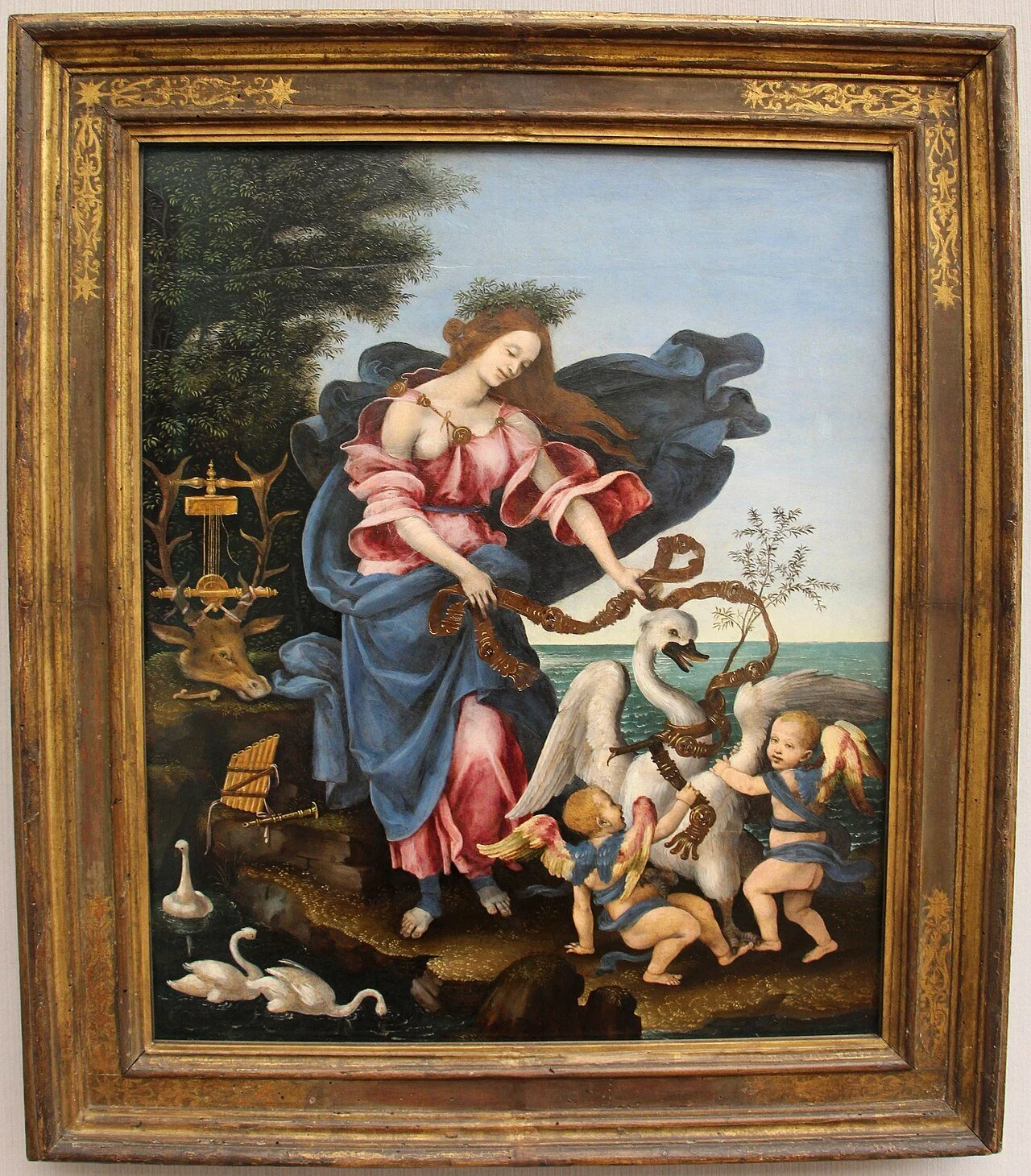
In Filippino Lippi’s (1457–1504) Allegoria della Musica(Allegory of Music [Erato]),created around 1500, a deer appears quietly within the landscape. Rather than being pursued, the animal becomes part of the painting’s natural and imaginative world—a subtle presence between the human figure and the wild.
On the table: In salmì and in umido
La ricetta dell'umido di cervo (The recipe for slow-cooked deer)
Unlike wild boar (cinghiale) or hare (lepre), these animals are not tied to one universally recognised Tuscan dish. Their shared culinary language is found instead in preparations such as game braised in wine (selvaggina in salmì), slow-cooked deer (cervo in umido), roe-deer ragù (ragù di capriolo), and fallow-deer ragù (ragù di daino).
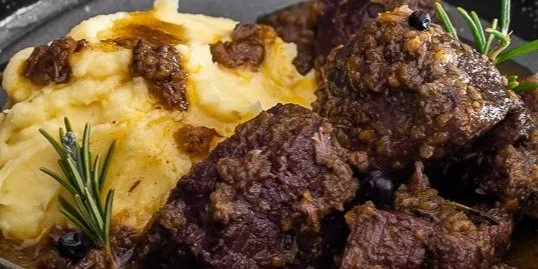
The lean, firm meat is traditionally marinated in red wine with juniper berries (bacche di ginepro), bay leaves (alloro), rosemary (rosmarino), and spices, then cooked slowly until tender. Often served with soft polenta (polenta morbida) or fresh pasta, these preparations belong especially to Tuscany’s autumn and winter table, carrying the flavour of both the season and the surrounding woodland.
Lepre: The Older Taste of the Hunt
The name carries the place: not simply pasta with hare, but pappardelle sulla lepre.
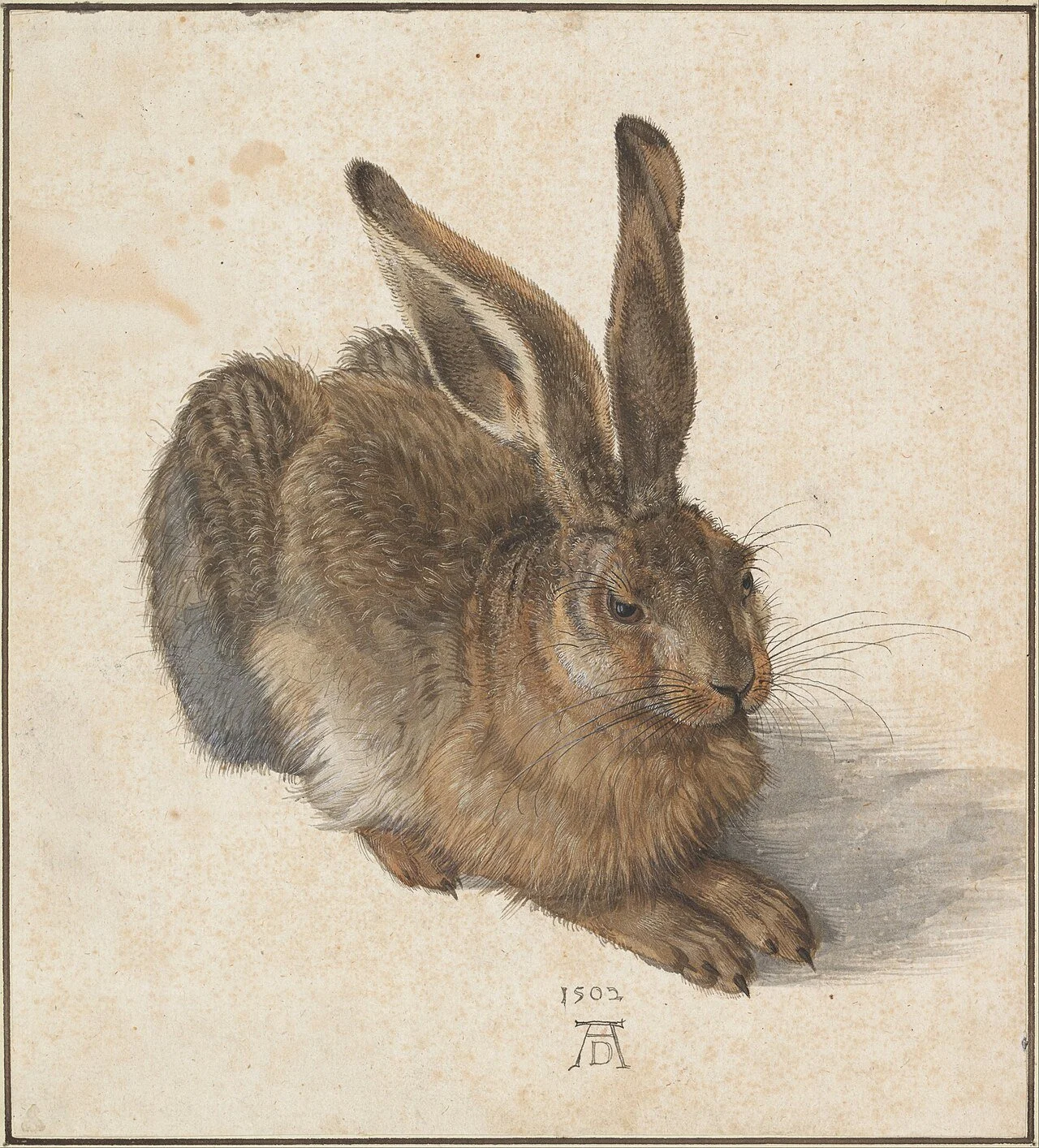
After wild boar (cinghiale), the hare (lepre) represents a quieter but equally enduring side of Tuscan hunting culture. Less associated with large communal hunts, hare hunting (caccia alla lepre) belongs to the rhythms of the countryside, hunting dogs, and recipes passed through rural households. In Albrecht Dürer’s (1471–1528) Feldhase(Young Hare), the animal is observed with extraordinary intimacy. Its alert ears, watchful eye, and carefully rendered fur capture the hare not as a symbol or a dish, but as a living presence.
On the table: Cinghiale in dolceforteOn the table: Pappardelle sulla lepre
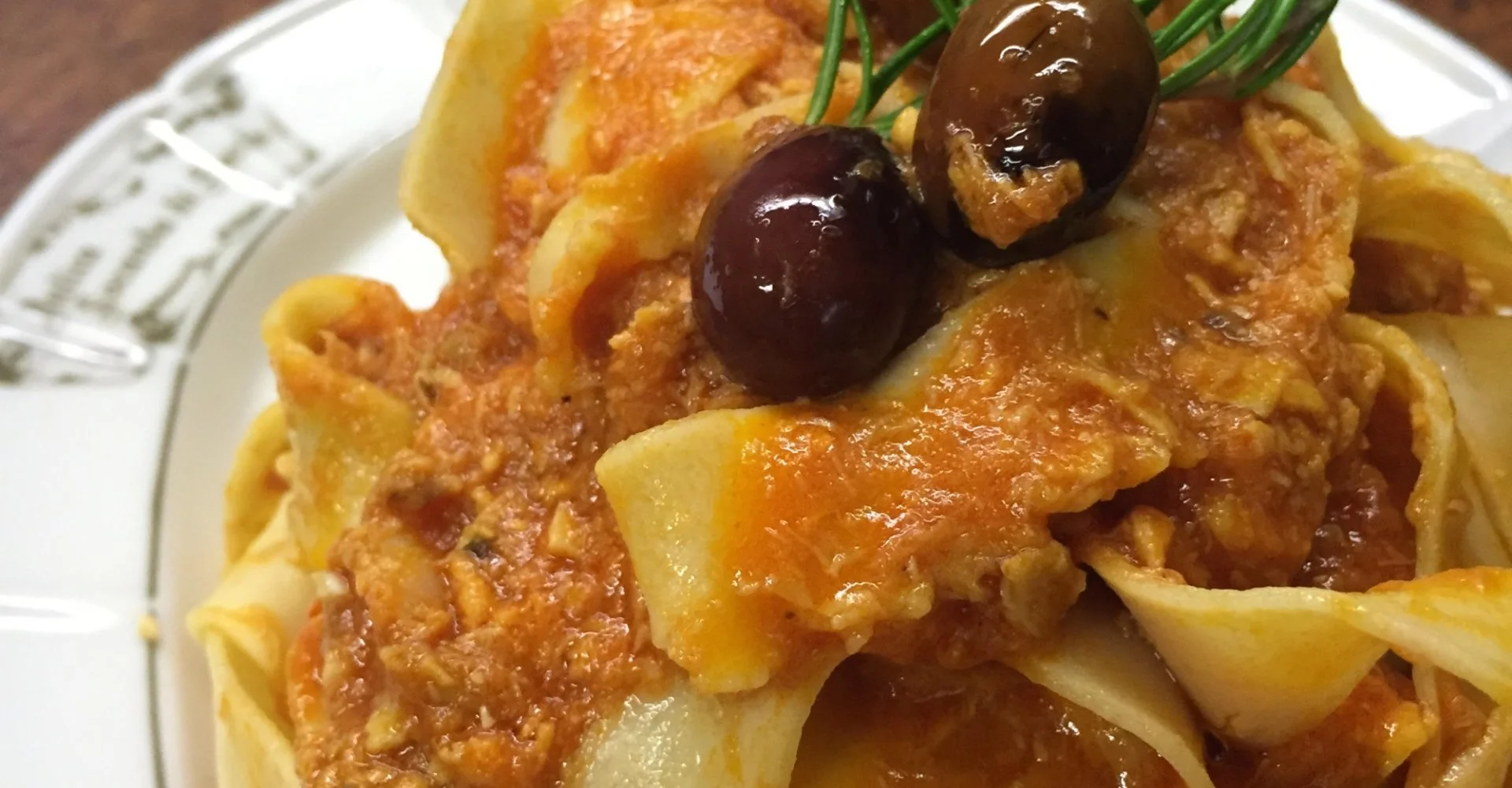
La ricetta delle pappardelle alla lepre (The recipe for pappardelle with hare)
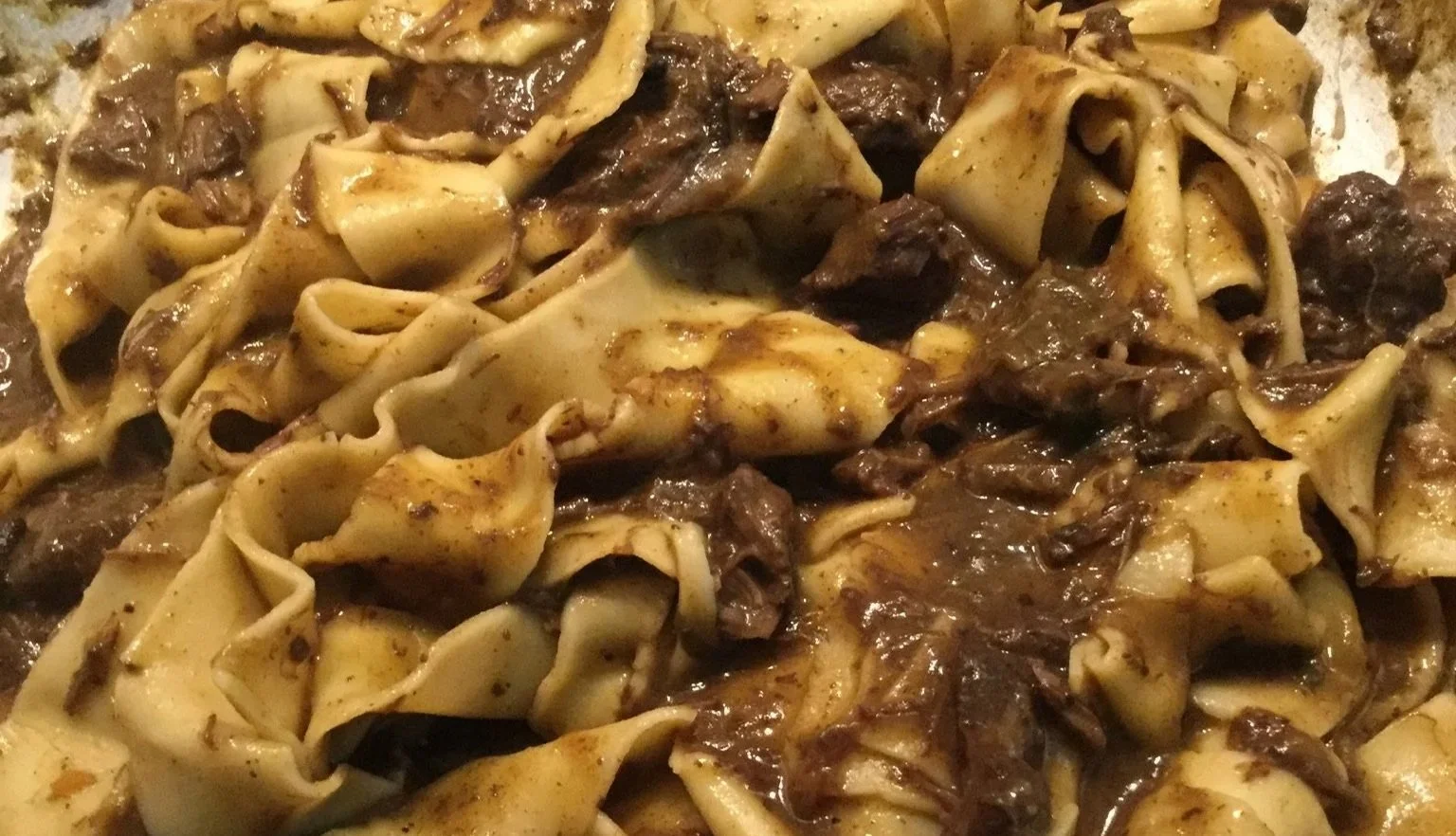
Wide ribbons of egg pasta are coated in a dark, slow-cooked hare sauce made with wine, aromatic vegetables, herbs, and finely chopped meat. Older preparations could also include the liver or blood, heart, kidneys and lungs for the base of the sauce of the hare, creating a deeper flavour while using as much of the animal as possible.
The name pappardelle sulla lepre carries a distinctly Tuscan character. The dish has remained part of rural cooking, particularly in the Maremma, where hare (lepre) still belongs to the seasonal rhythm of hunting and the family table. Less familiar to visitors than wild-boar ragù (ragù di cinghiale), it preserves the taste of an older countryside kitchen: earthy, concentrated, and built through patience.
The Birds of the Autumn Table (La selvaggina da penna)
As autumn arrives, Tuscany’s hunting table shifts from the larger animals of the woods to birds moving through woodland, fields, and wetlands. Pheasant (fagiano), wood pigeon (colombaccio), mallard (germano reale), woodcock (beccaccia), thrushes (tordi), and skylark (allodola) all belong to this seasonal landscape.
In Piero di Cosimo’s (1462–1522) Incendio nella foresta (The Forest Fire), birds wheel and flee above the burning woodland. Their movement brings urgency and life to the landscape, presenting them as part of nature’s unfolding drama before they ever enter the kitchen.
On the table: Arrosto girato, allo spiedo and in umido
La ricetta del piccione arrosto (The recipe for roast pigeon)
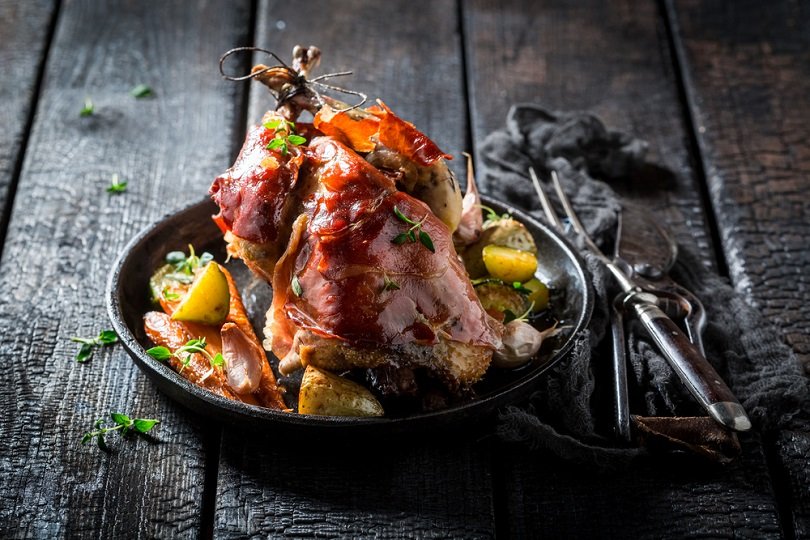
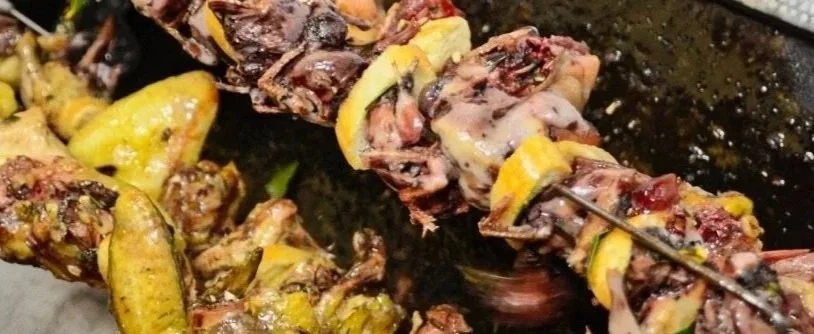
These smaller birds bring a different character to the Tuscan table. Rather than being made into long-cooked sauces, they are often prepared whole—roasted while turning before the fire (arrosto girato), cooked on a spit (allo spiedo), or slowly braised (in umido).
Pheasant (fagiano) and mallard (germano reale) have fuller, darker meat suited to roasting and braising, while the more intense flavour of wood pigeon (colombaccio) may also be used in wood-pigeon ragù (ragù di colombaccio) with fresh pasta. Smaller birds such as woodcock (beccaccia), thrushes (tordi), and skylark (allodola) belong to an older rural style of cooking centred on the hearth, careful seasoning, and preparing the bird nearly whole.

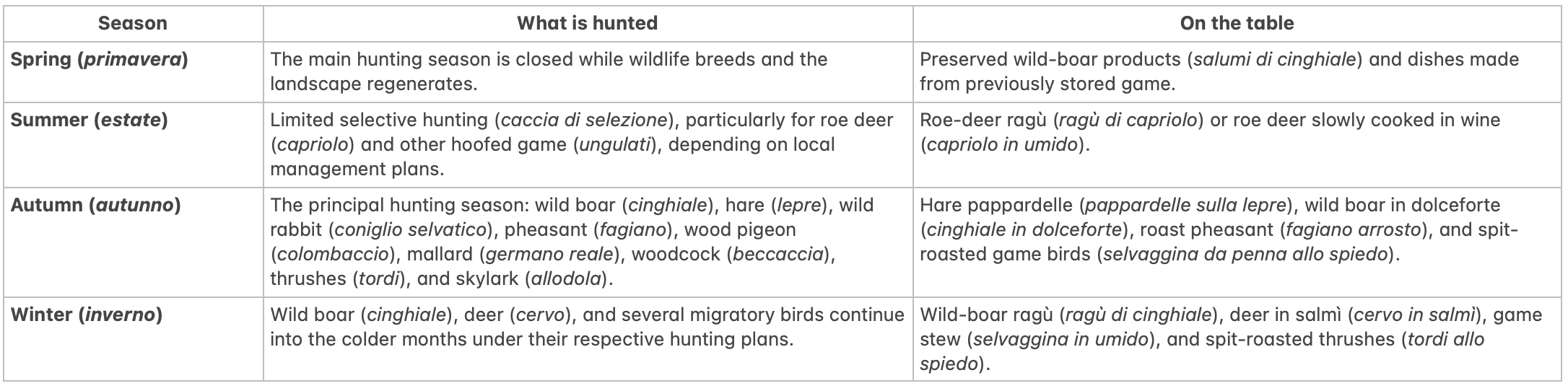
A Seasonal Hunting Table (La tavola della caccia attraverso le stagioni)
From the Wild into Our Lives
In Tuscany, nature has never existed only beyond the walls of the city. It enters everyday life through trees, animals, seasons, paintings, and food. The same woods and hills that gave Renaissance artists a setting for hunting scenes also shaped the imagination of rural kitchens.
Art and food preserve this relationship in different yet connected ways. A painting holds the movement of the hunt (la caccia) within a frame; a recipe carries the landscape through wine, herbs, fire, and time. Both grew from the ways Tuscans (i toscani) observed, interpreted, and lived within their natural surroundings.
To bring the wild to the table is therefore not simply to consume an animal. It requires an awareness of where it came from, the season in which it was taken, and the knowledge needed to prepare it without waste. Respect does not begin when the dish is served. It begins in the wild—with restraint, responsibility, and the understanding that nature is not an unlimited pantry.
To eat from the wild is to accept nourishment and responsibility together. The final dish may arrive on a plate, but its story begins long before—with the animal, the landscape, and the people who learned to live alongside them.
This study is dedicated to my dearest Lorenzo. Thank you for showing me and taking me to the wild side.